
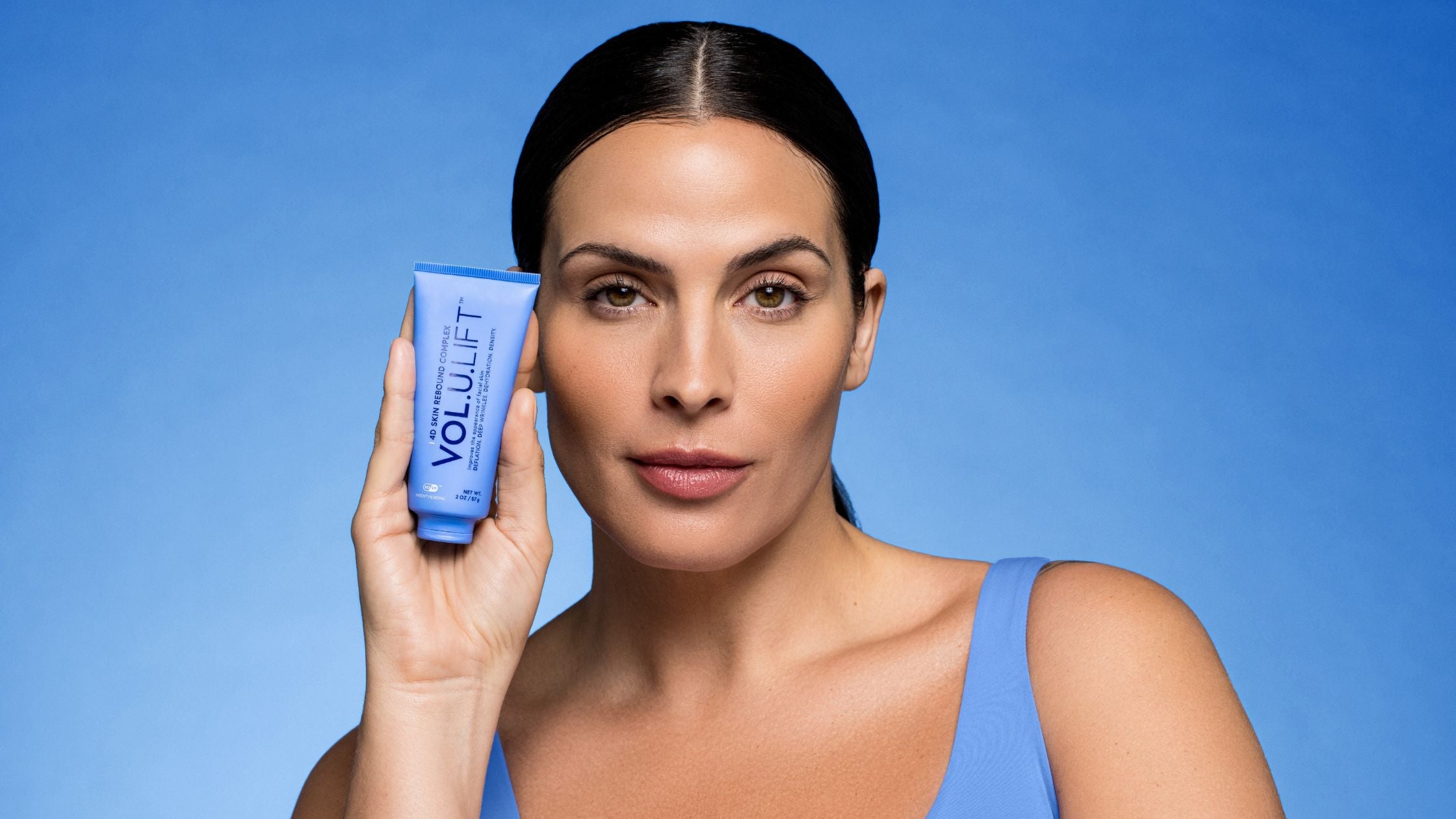
Bakuchiol: The Retinol Alternative in VOL.U.LIFT and What the Science Actually Says
Retinol has held its position as the gold standard of anti-ageing skincare for decades and for good reason. Its clinical evidence for stimulating collagen production, reducing wrinkle depth and improving skin texture is among the most robust in the field. The problem with retinol is not whether it works. The problem is that many people can't tolerate it.
Redness, peeling, sensitivity, increased sun sensitivity, the months of adjustment before the skin acclimatises, retinol is effective, but it comes with barriers. And for women with mature, menopausal or already compromised skin, those barriers are often prohibitive.
This is where bakuchiol enters the conversation and where the science gets genuinely interesting.
What is bakuchiol?
Bakuchiol (pronounced buh-KOO-chee-ol) is a meroterpene, a naturally occurring compound extracted from the seeds of the Psoralea corylifolia plant, known as babchi, which grows across India and Sri Lanka. It has been used in traditional Ayurvedic and Chinese medicine for centuries, but its potential as a skincare active was not clinically investigated until relatively recently.
What researchers found was that bakuchiol, despite being structurally completely different from retinol, produces remarkably similar effects on skin at the molecular level. It activates many of the same gene expression pathways as retinol, stimulating collagen production and improving skin cell turnover. But it does so without the receptor binding mechanisms that cause retinol's characteristic irritation.
What does the clinical evidence show?
External clinical studies on bakuchiol have demonstrated three categories of benefit that make it a particularly well-suited ingredient for the skin concerns VOL.U.LIFT addresses:
- Collagen stimulation: Bakuchiol significantly stimulates collagen production in fibroblasts, the cells responsible for producing the structural proteins of skin. Specifically, bakuchiol stimulates Type I collagen (the most abundant collagen in skin, responsible for tensile strength and structure), Type III collagen (associated with skin suppleness and healing) and Type IV collagen (which forms the basement membrane and supports the skin's structural framework). This is particularly relevant for menopausal and weight-loss-affected skin, where collagen depletion is one of the primary drivers of visible change.
- Wrinkle depth and skin roughness: In a 12-week clinical study of 17 participants aged 41–50 with twice-daily application, bakuchiol produced significant improvement in both wrinkle depth and skin roughness, confirmed by silicone replica analysis. The improvement was measurable at 4 weeks and continued to deepen through 8 and 12 weeks of use, demonstrating the same progressive, cumulative mechanism seen in VOL.U.LIFT's full clinical study.
- Epidermal regeneration and barrier repair: Bakuchiol has also been shown to improve wound healing and epidermal regeneration, supporting the skin's barrier function and its ability to repair itself. This is particularly valuable for skin that has been compromised by the structural changes of rapid weight loss or menopause, where barrier function is often impaired alongside the more visible signs of ageing.
Why this matters for VOL.U.LIFT: In VOL.U.LIFT's 4D formula, Bakuchiol is the primary active targeting Deep Wrinkles, the second D. But because it also stimulates collagen (supporting Density), improves hydration retention (supporting Dehydration) and improves barrier function, it contributes across multiple dimensions of the formula's effects. This is why multi-active formulas consistently outperform single-ingredient products.

Bakuchiol vs retinol: the practical differences
For most women considering an anti-ageing serum, the practical comparison comes down to this:
- Tolerance: Bakuchiol is non-irritating, suitable for sensitive skin, and requires no acclimatisation period. Retinol requires a weeks-long adjustment phase and is unsuitable for some skin types entirely.
- Sun sensitivity: Retinol increases photosensitivity and is typically recommended for evening use only. Bakuchiol has no such restriction, it can be used both morning and evening, which is why VOL.U.LIFT is formulated for twice-daily application.
- Skin type suitability: Bakuchiol is suitable for all skin types, including sensitive, mature and post-menopausal skin. Retinol is contraindicated for many of these skin types, particularly at higher concentrations.
- Pregnancy and sensitivity: Retinol is not recommended during pregnancy. Bakuchiol carries no such restriction.
Bakuchiol in context — the VOL.U.LIFT formula
VOL.U.LIFT contains bakuchiol as one of five key actives, each targeting a specific dimension of facial volume loss. Bakuchiol works synergistically with L-Ornithine Amino Acid (which restores facial fat volume), HA Silanol (which restores hyaluronic acid), Plant Collagen Fragments (which rebuild the collagen matrix), and Kangaroo Paw Extract (which boosts elastin and firmness), all delivered and amplified by IMAGE Skincare's patent-pending XOSM™ Technology.
The result is a formula that doesn't ask bakuchiol to do everything. It asks bakuchiol to do what it does best . It stimulate collagen, reduce wrinkle depth, improve barrier function, while the other actives address the remaining dimensions of volume loss that bakuchiol alone cannot reach.
This is what the 12-week clinical study, published in the Journal of Cosmetic Dermatology (Wiley, 2026), demonstrated: at 12 weeks, volume increased 20.1%, firmness 22.5%, wrinkles reduced 20.7%, hydration increased 21.8%. No single ingredient could produce all four outcomes. A well-formulated, multi-active complex can.*
VOL.U.LIFT is available now in Ireland exclusively at imageskincare.ie.
RRP €119.
Free shipping on orders over €70.
*Based on a 12-week clinical study of 29 participants ages 35–65 with twice daily application. Study data on file with Image International Manufacturing, LLC. Individual results may vary. VOL.U.LIFT™ Patent pending. Bakuchiol clinical data sourced from published external studies; individual ingredient study data is not a claim for VOL.U.LIFT as a whole.